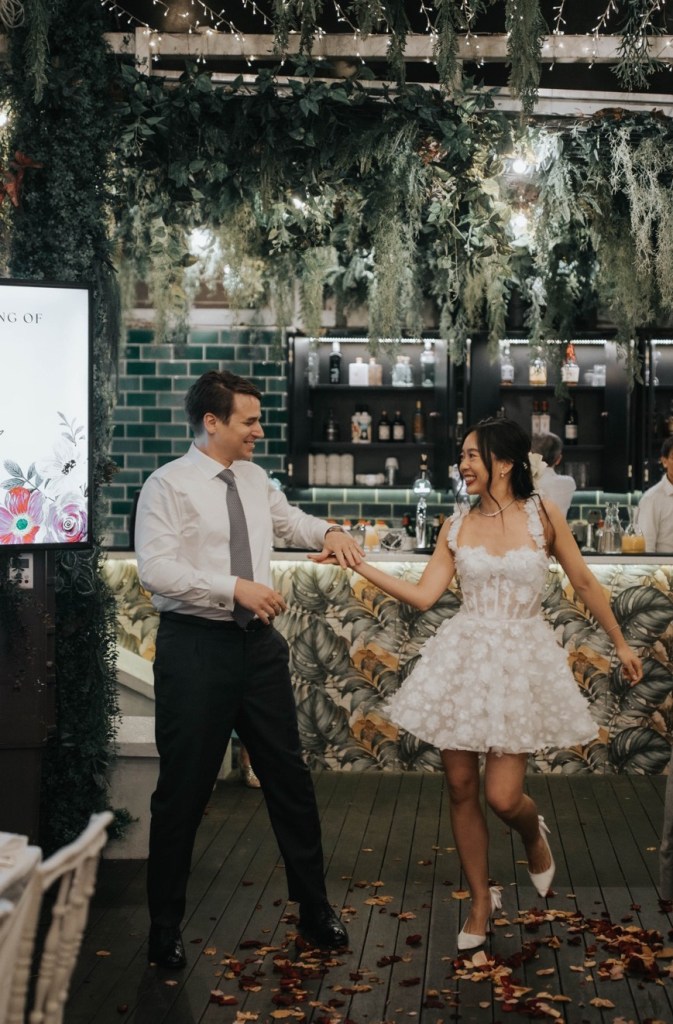
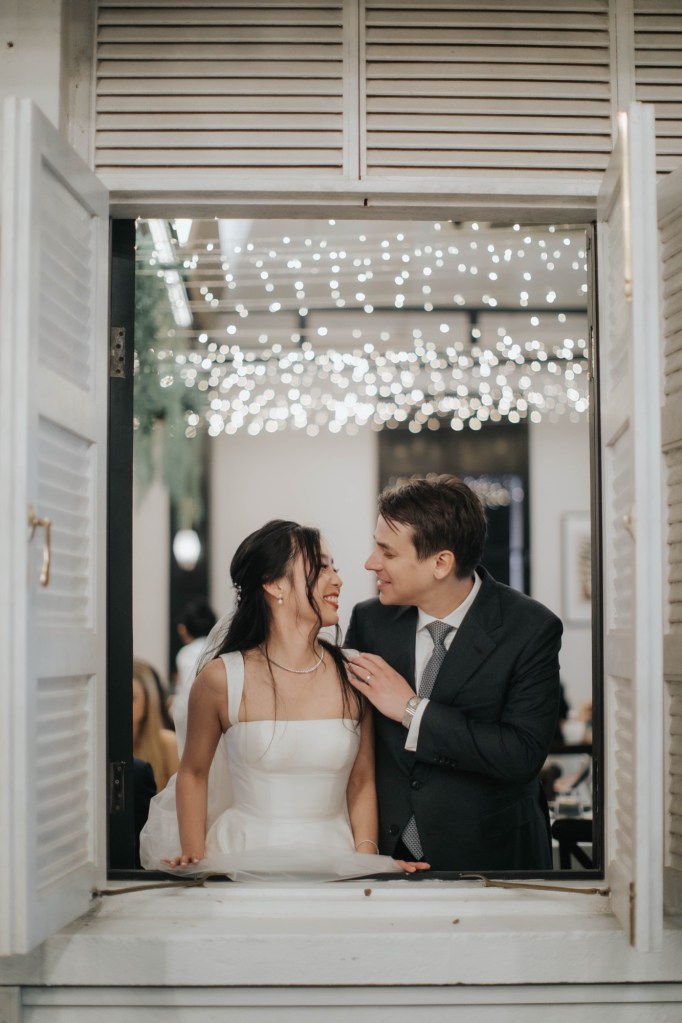

How did we get from not wanting a wedding ceremony…
To having three celebrations, in two countries?
I need to get around to recording these memories in earnest — once I have the official photos ready!
How did we get from not wanting a wedding ceremony…
To having three celebrations, in two countries?
I need to get around to recording these memories in earnest — once I have the official photos ready!
The old man with the hats. He is most often sitting at Hougang bus interchange, but could be spotted anywhere else in the neighbourhood. Coffeeshops, on the streets. Short, squat, with a blank expression. He fashions fantastical hats you wouldn’t dream of. His signature: a skullcap made up flattened Coke cans, and perched atop is a rubber ducky. Other favorites are his festive-themed Fortune God hat, with Cai Shen Ye proudly unfurling couplet scrolls from the crown.
The fights. Between couples, between families. Loud and public. One family, in particular, in the block across from us. Between window grilles I poked my nose out, trying to put a visual to that child’s shrieks which are terrifying, urgent, matched only by the desperate scoldings of its parent. I’ve never seen them, but heard enough for a lifetime. From the adjacent block, a man holding a chopper chases a woman across the parking lot.
And, in the shops surrounding this parking lot, back when the crowd were boxed in by uncleared grassy fields, young men traded hands furtively, too obvious even to my 9-year-old eyes.
Across the street from this parking lot, a little park that hosted getai for many years every 7th month of the lunar calendar, before getai was no longer in demand. Sin Heng Kee porridge, those massive pots where they stirred the most delicious congee you’d have had. That one staff lady who was teased when I was there once, for I was, inexplicably, her oǔ xiàng (idol)? To this day I do not understand what transpired.
Hougang One. Sakae Sushi, with its conveyer belt, a happy indulgence a few times a week. Peak luxury to me, at the time. The billiards shop right across to it, that one day many years later I would play at, just once. And just in the hawker centre a few minutes walk away, the famous A Star Western, with its massive chops and fish and chips with decadent tar tar sauce.
In another part of Hougang, a landed home where the Mugger’s Club was formed, as we studied together for ‘O’ levels. Day in and out, together in that living room, eating huge pots of pasta. Not remembering any studying done, only the games and silliness.
Again, another part of Hougang less familiar to me, but still felt like home anyway, where I visited twice a week throughout my University days to give tuition to C. She had the same name as my best friend, and I liked her too, half-German, half-Indian, earnest and sweet. She had big dreams and ambitions, and wanted to be a nice girl. Her father was a horror show, and her mother delayed payment to me for months after we completed her tuition – sending me apologetic and evasive messages riddled with unnecessary umlauts. Once, she made spätzle which tasted like puke.
But let’s end on a happy note.
Ciyuan Community Club, where Popo and I went to sing karaoke, just us. Where we ate at the open-spaced hawker centre with those giant fans overhead, long-limbed and slumberous. Where Kym Ng happened to be filming there, for a food review, and – sitting just a few tables away – my ever-free-spirited Popo said aloud “Oh that’s Kym Ng! Used to be famous, now not anymore.”

Kindly sponsored by my dear friend Xin, we watched the last and matinee show of VAMPYR at the Drama Centre Theatre.
Beginning with a lot of ha-ha-has and hoo-hoos, jangly bones, halloween-esque faces pulled, our vampiric duo made their entrance. It was a long entrance. For the first what felt like minutes, I was tickled and mildly impressed by their physicality, quality of voice.
After awhile I felt bad that this sequence was not garnering the laughter it obviously was soliciting. Was I amused? Yes! Was I guilty enough to fake laugh a little? I did.
VAMPYR was entertaining enough.
Some sequences, imageries, and moments held their own. And of these, a few were held too long, and broke the spell.
While I enjoy a good multi-use metaphor, the somewhat ham-fisted and shallow usage of its titular vampire left me wondering. While I get that the night shift workers’ nocturnal and poor working environment made them as good as the undead, the blood-sucking ways of corporations made them vampires, and literal vampiric bats were impacted by the greenwashing… what was the ultimate intention of the running metaphor?
What was similar about them, or are we highlighting a contrast? In any case, despite the continuous delight in hammering in this metaphor, it seemed to have no further meaning besides being a nifty gimmick.
Things I would have liked to see:
More showing, less telling (most of the revelations came through exposition, which was a waste). More leveraging of the actors extraordinary talent, with their bodies, their voices, and chemistry.
More precision and conciseness. They could have shaved a good 20 min off and made it extra good.
More consistency. The nature of these vampiric beings switch in and out. I do not mean between the three vampiric metaphors, but even within each, there was too great a variation in movement, speech, even costume, for me to grasp a ready line that weaves the bigger picture together.
A sequence of things happening, and a story, somewhat. I’m glad to have watched it anyway, if not purely for a good time and entertainment. It could, and had very real potential to, have had more depth to it.
Also, for a play about greenwashing, they sure use a lot of plastic! (Joke. I’m sure they recycle. But it was a lot.)
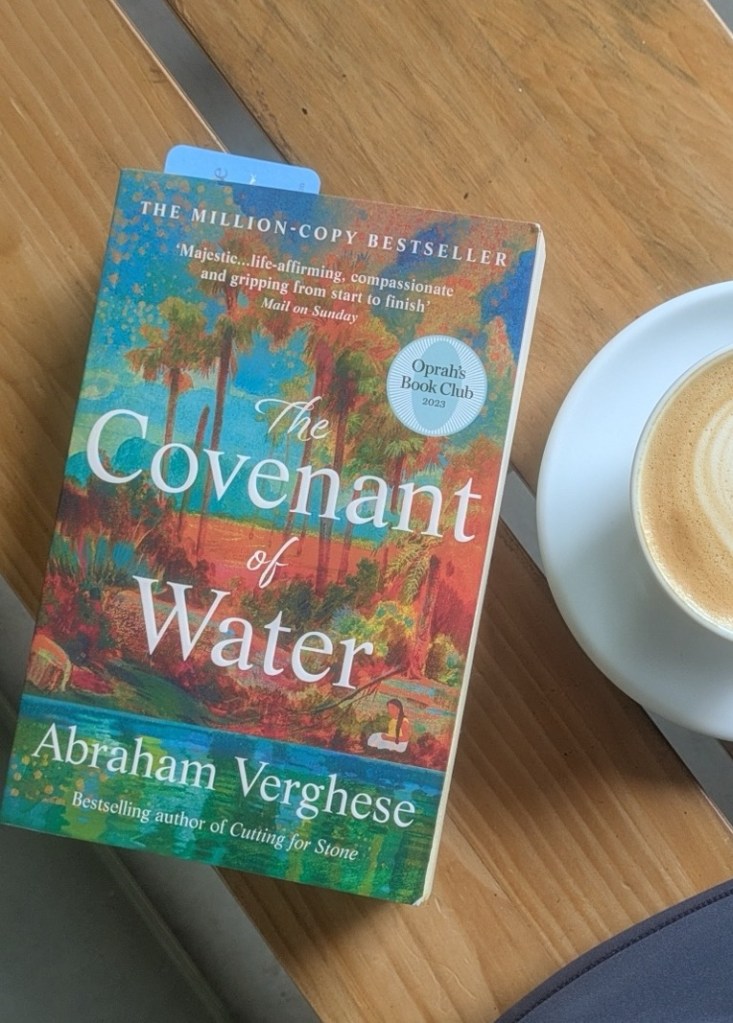
This review will be totally biased given my penchant for:
Set in the state of Kerala, along the Malabar coast, this is a watery, evocative novel that takes its time to meander through the river of life. It begins as a bildungsroman of Big Ammachi (as a young bride), branching into multiple characters, interconnected by relationships, maladies, and themes of love, loss, grief, redemption — you know, the usual.
All this is against a backdrop of the Saint Thomas Christian community in Kerala, and historical events spanning the 20th century: British colonialisation and eventual independence, rise of Naxalism, and the shifts – or lack of – in the caste system.
I recommend this for an immersive read, if you want to be convincingly pulled into a tale of heartbreak and hope, of human strength and weaknesses. And especially if you enjoy novels set vividly in a particular place, time, and culture.
Rating — 4/5
To read Solaris (Stanisław Lem) and The Lathe of Heaven (Ursula K. Le Guin) one after another is akin to having a chain of fever dreams. Both center around bringing creation through imagination, hallucination and dreams; both feature a psychlogiest, and an alien species. Yet, despite their superficial similarities, the two slim novels could not be more different.

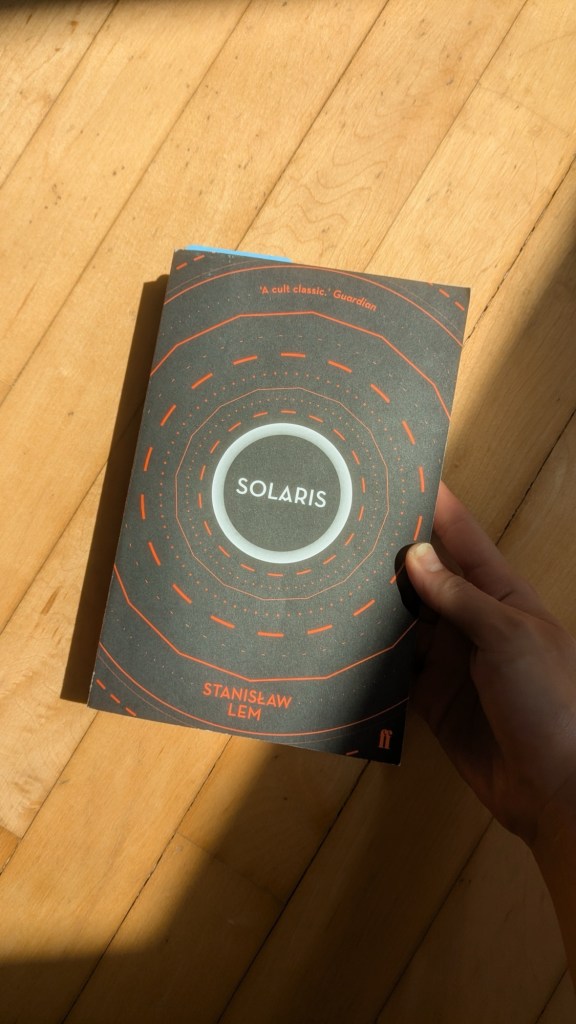
Solaris — timeless, sterile, didactic — is a philosophical exposition on belief, religion, and unknowability of an alien being. The Lathe of Heaven — decidedly vintage, with all the fixings of a 70s sci-fi — explores the ethics of human influence and the dangers of playing God.
I first read Solaris, told from the perspective of a psychologist in space, Kelvin, who finds himself unable (or unwilling) to separate reality from hallucination. The narrative cuts in and out from the current setting to pedantic excerpts from history and research.
I say pedantic not negatively: up in space, amidst the eerie and unfamiliar, you’re submerged in the surreal, and to intersperse this suffocating surrealism with clinical diatribes was a clever move by Lem. The sharp contrast brings you away from the plot, which is a mere vehicle to greater questions the author is asking:
How do we reckon with and pretend to understand a foreign entity – whose motivations, composition and, in fact, fundamental cellular structure so greatly differ from ours? How does our understanding of god, belief, a higher being, reinforce the need to understand and interact with the utter unknown?
Lem has publicly denounced the overwrought film adaptation by Tarkovsky (Solaris, 1972), and along this thread, I genuinely believe he would have turned a few in his grave when Interstellar hit the screens.
But enough of Solaris. We now come to The Lathe of Heaven.
“Everything dreams. The play of form, of being, is the dreaming of substance. Rocks have their dreams, and the earth changes….”
TLoH was a delightful read. Here, plot and idealogy play equal role in moving the narrative, and Le Guin took her liberties and had fun with it. (If you can call multiple ways of envisioning an apocalypse / dystopia fun.) Characters were meticulously and colorfully built.
In both novels, you can truly only name three signficant characters.
Yet unlike the desolation and isolation pervading Solaris, you find breaths of hope and warmth in TLoH. That is not to say you will not be broken by reminders that we are, as human, essentially hapless – despite and because of the influence we can exert on reality.
I love Le Guin’s works and this one did not disappoint. It could very well vie for my top spot from her repertoire (currently, The Dispossessed).
I enjoyed the reading of TLoH, but have to say that because Solaris was so minimalist and atmospheric, it stuck in my mind for much longer. While I did not set out to read these two in succession, I’m glad I did and highly recommend both novels, and reading them together.
Solaris — 4.5/5
The Lathe of Heaven — 4.5/5
 Q
Q 