Leading up to the days I watched Pickle Party , created by my dear friend and theatremaker Xiao Ting, I had the wildest dream(s), likely inspired by the conversations we had around the piece.
–
In actuality nesting in an abundance of hotel-fluffed pillows, I find myself watching from the top down, helpless observer, of a microcosmic invasion. À la Thronglets in Black Mirror, à la Conway’s Game of Life. These tiny beings, unknown bits and bytes, make their way through a petri dish, leaving behind a trail of more unknown bits. With creeping realisation, I understand that they are eating their way through and digesting their habitat. That these beings are us, this petri dish our Earth…
And now, my physical body still in a wonderfully made King-sized hotel bed, I am perched precariously atop an awfully high pile of something. It is trash — this time realisation comes as an instantaneous slap — a forever accumulation of all the trash we have ever produced as mankind. Mainly men, and not so kind. The pile won’t stop rising, a terrifying vertical growth I am once again helpless in slowing down. I watch with dizzying vertigo as I am farther and further from the safety of Earth…
–
Less than a week later, I sat down in an intimate studio space, bubbles rained down at me at the same time I learnt about climate refugees. ‘Displaced by the sea’, “but,” I thought, “did the sea not birth us, did we not displace the sea – itself millenials older than the first of our kind?” Who could claim the land, the sea, and Earth?
I thought about microbes that eat, digest, and fart out their metabolic wastes. I thought about us, who convert these waste to eat, digest, fart, ad infinitum. I thought about many things the days after Pickle Party.
I guess that’s what we are. Organisms that eat, digest, poop, waste, and sometimes, somewhere in between — think.
Watched The Danish Girl for the first time. It was beautiful and haunting. While most would be captured by Einar, I identified most with Gerda. To me, the protagonist of the show – the one whose emotional journey I followed most closely – was her.
Maybe it’s because I can never understand what it’s like to be Einar, to feel like a man or woman in the other’s body. It was strikingly poignant when she said “This is not my body” with all the conviction she had. I tried very hard to picture myself in a man’s body, as a female. But I came up empty, emotionally. I’d imagine I’ll be gay, but be alright performing maleness. I don’t know.
But Gerda, oh Gerda. I feel every pain and love you did. The love you have for a man, who is slowly becoming something else much more important than you. To have him slowly disappear, so slow that you still have hope he’d stay, that he’s still there.
I can even relate to the support Gerda provides him right at the start, as Einar first explores his self as Lili. I can imagine myself giving in, inch by inch, to his whims. I want him to be happy, and even if it’s unconventional, I’ll do what it takes for him to be him. And I’ll slowly fester in my own unfulfilled needs. Of losing someone.
But at the end of the day I’ll let go too, like Gerda. With as much pain, and still as much love as she had. I found Gerda so courageous. I know that what Lili went through was tough, she was born a man but chose the difficult path to become a woman because she can’t help it. But just like Lili, Gerda wholeheartedly loves Einar, even Lili, that she chose the difficult path to keep loving her. She can’t help it.
I know people who love so deeply that it doesn’t matter what gender their partner is or becomes. They just love them for who they are. I don’t think I can do that. I’ve never felt attracted to a woman and even if I were to love my partner if he transitions, it would not be a sexual kind of love. Of course, I wouldn’t know until it happens.
In the mean time I’ll avoid suggesting H wear any of my dresses.
There is so much to go in-depth about for a review, but to do it justice i’d need to spend way more time than i can afford now with work. Essentially, it’s amazing and everyone should give it a try.
1. I don’t know why i started.
Throughout the first episode i kept asking myself: “Why am i watching this?” Not because it was bad, but… it just didn’t seem like something i’d watch. The premise is as distilled as it can be: man arrives in town and corrupts other man. Small town cop investigates. The best i can do with categorizing it is dark comedy. By the first episode, i still had no idea what i was into – but damn was i hooked.
2. It’s just… good.
It’s difficult to pinpoint why exactly, because every element is perfectly crafted then melded together into an impeccable series. The acting – Martin Freeman, Billy Bob Thornton, Colin Hanks, Allison Tolman. There is literally no attractive person on the cast, male or female. By attractive i mean Hollywood attractive. NONE. Except maybe Collin Hanks, he is strangely appealing. Shut up.
That is just so rare in any show? They’d always have at least a token hot girl. But no Fargo doesn’t give a shit. Everyone is as they are, like in real life. Acting is top-notch from everyone: the chilling Billy Bob Thornton, and special mention to Martin Freeman.
FREEMAN you beautiful human being. As if being an excellent Watson isn’t enough. Here he is as Lester, his Minnesotan accent fucking spot-on; the transition of him from awkward to angry believable and stunning. He has such unassuming control over his self; i can only describe his success in acting as not being over. His eyes when he *spoiler* sends Linda to her death for his sake, i went breathless and had to watch it several times, just reveling in that moment of acting that transcends fiction and becomes fucking art.
3. The script is genius.
This is a series to be re-watched, because there are just too many moments of discreet humor along with the more direct ones. It’s a kind of funny that seamlessly weaves into the dialogue and plot, the kind of humor that punctuate our daily lives. It is unpretentious and natural, and thoroughly enjoyable. You get the kind of rush when you share an inside joke; also you’ll feel smart because their jokes aren’t cheap.
There are also gems of genius in the writing i can’t quite describe. They grab you and tease you, then before you know it surprise you. *Spoiler* I was especially taken by the scene where Malvo follows Gus home, the neighbor who had shared a midnight cuppa with Gus went up to Malvo and hissed “you’re not supposed to be here.”
At this point we’re aware of Malv’s manipulative ways and resourcefulness. I just know the scriptwriters were attempting to make us infer neighbor is involved with Malvo. They quickly let us know it’s not true though, but still – that tiny little audience manipulation to let you know they care. Brilliant.
Also, the beautiful fucking cinematics. I apologize for all the swearing in here, my love for Fargo is tapping into that. It’s like Wes Anderson without being pretentious.
Began and finished Unclean Jobs for Women and Girls by Alissa Nutting today.
It was the kind of book that even while reading it i understood it had a genius significant beyond present engagement; the kind i itched to write about after to make sense of just why it is so good.
It had the eclectic premises i so loved from George Saunders: to address overpopulation, all people had to host another organism on their bodies, a women chose to have an ant colony drilled into her bones – she is later consumed and becomes one with the herd; A porn star sits through a eat-all contest, she is to have anal sex in space with the winner; A mortician smokes the hair of corpses and hallucinates their memories.
She does this with a startling clarity of unorthodox metaphor, and just the right amount of epigrams. Even the prose was reminiscent of Saunders at his best: concise, unpretentious, in your point – but so cleverly delivered.
Probably the insight i’ve most gratefully plucked from Nutting’s work, though, is that the best satire does not take a stand. ‘Teenager’ finds the frighteningly casual take of a young girl on sex and her abortion. Nutting frees herself from the onus of criticism – she merely portrays the characters as they are: bored, flippant. If any judgements were made, other roles did so on her behalf.
The pre-abortion counselor takes on the role of adult, of conservative persecutor: “It’s hard to understand the concept of something being permanent,” she says of abortion. “Having a baby is just as permanent as not having a baby,” retorts our protagonist.
There is truth in what the teenager said. There is also something vaguely self-righteous and therefore annoying about the counsellor. At the same time there is a disturbing, detached cruelty shading the teen that we cannot shake off. She says of giving birth:
Vaginal elasticity is a secondary concern […] My vag must stay like the glove in the infamous OJ Simplson trial: too small to fit unless the wearer really, really wants it to.
We’re forced to think for ourselves, make the call on what we think is right – or realize that there is no right/wrong dichotomy.
Later, she filches her grandmother’s (on the brink of death and speech-device ala Hawkings) credit card to pay for the abortion. At the juncture between with-fetus and near-death she observes
It is so gross how we are born and so gross how we die.
There is something striking how simply Nutting has laid out this fact, as if we are for the first time having a truth brought into sharp focus. Like it has always been there, its truthfulness never verified nor denied, but just there – and then all of a sudden pulled inwards from our peripheral vision.
Another merit is Nutting’s chameleon-like abilities with perspective taking. She shape-shifts from laughable self-deceiving gullibility to resigned, precocious, apathetic, desperate.
My favorite character of hers was probably that of the porn star. We know little of her but her current thoughts. I found it especially poignant in the small way she enjoyed being a formless, androgynous figure when slipped into the space suit. She has a quiet desire that we are given just the bare crumbs of, making her a mystery. As the man enters her anally in space, she thinks:
I feel fine but also very strange, looking at the world and its distance. I feel its weight in my stomach like a pregnancy, like an old meal. When I want to, I cover up the Earth and its oceans with my hand, and then even with the cameras it seems like no one can see me.
There is something so sad but so hopeful contained in a single imagery, and it is such a perfect imagery precisely because it evokes a shade that i cannot explicate in words.
Another, less elusive one, that got me:
My phone is a tightly shut clam and all the badness that happened inside is going to irritate itself into a pearl.
In ‘Teenager’, in the moment of teenage life gone to shit. Drawing back from more incomprehensible feelings we get the one almost everyone has experienced. The moment of dread and thrill when we’re swimming in drama and are just waiting for the shit-storm to stir and settle before we tentatively step back to reveal the collateral damage.
Very much in love with this and am hoping Alissa Nutting has written more.
My greatest literary weakness is for twisted characters – humans innately drawn to cruelty but free from circumstantial stimuli and narrative judgment. No group of writers does this better than Japanese authors. Reading Yoko Ogawa’s The Diving Pool has deeply satiated my need for raw human darkness. It renders her other more renowned (translated) work, Housekeeper and the Professor, positively tame. I can’t reconcile the fact that the two pieces once resided so intimately within the same mind.
Ogawa, in The Diving Pool, brings cruelty to its extreme – nonchalant, matter-of-fact, and entirely internally driven, the protagonist finds deep pleasure in her private torment of a young toddler.
I wanted to savor every one of Rie’s tears, to run my tongue over the damp, festering, vulnerable places in her heart and open the wounds even wider.
What fascinates me is how non-violent her cruelty was: hiding, leaving the child to find herself alone; lowering the child harmlessly into an urn. These acts are almost childish or innocent in its simplicity. No blood was shed, no pain inflicted, yet the motive to upset was so sparklingly clear. It is how real, how plausible these acts are to us that draws me in.
I refuse to believe that there isn’t a tiny but fully alive mass in us – cushioned and curtained between fear, between conscience – that strains to test the power we have over the vulnerable. There is something about how children fall into our trust so wholeheartedly and confidently that nudges our curiosity, our need to exploit it. It’s in everyone, regardless of whether or not it’s acted upon. Ogawa parcels it neatly in a single line:
The arrogance of Rie’s self-assurance restored my cruel thoughts.
I’ll never bear to intentionally hurt a child. I’m the kind of person who spirals into obsessive panic when a child (any child) bumps against something (usually the floor). But it doesn’t preclude me from understanding (or even having) such dark thoughts. It’s an unpopular opinion, sure, but darkness is in everyone. It can be overshadowed, or completely under the control of our conscience, but it’s a basal characteristic. What I love about Japanese fiction is their understanding, and complete acceptance, of this innate cruelty.
My desires seemed simple and terribly complicated at the same time: to gaze at Jun’s wet body and to make Rie cry.
Here lies a beautiful juxtaposition, the equally intense desire for the external, the aesthetic, the perfect, against the internal, the dark and the hidden hideousness. Ogawa crafts a protagonists without the fuss and fancy of societally constructed moral fear, choosing to present one whose needs are laid out bright as day before her.
The novella contains two other short stories. Both adequate, but if you’re not someone who can swallow blunt human cruelty and unresolved endings, steer clear of it. Personally very pleased with this read, though.
I suggest reading this at a go, on a sunny afternoon, listening to Orange Pekoe . The effect is stunning, if you like me have a thing for jarring contrasts.
I finally got around to Black Mirror’s 2014 Christmas special yesterday, after putting it off in my reluctance to clean Black Mirror off my to-watch dock. It was – if i were to be succinct than loyal – disappointing. First things: I’m very new to (and very much in love with!) the Black Mirror universe. In fact, i started it because the release of White Christmas rejuvenated its fan base. Series 1 & 2 was completed within two weeks, so my inclination to compare runs rather high.
Even as the weakest BM episode, it was engaging enough for > 1 hour to feel much shorter than it was. Again, the actors were on point; i do have a penchant for british actors – there’s always a faint shadow of stage in their performance, which appeals to my early years in theatre. Jon Hamm worked in contrast to the cast, especially in context of his character – more offhand and quick charm.
Also, not sure if it’s just me, but little segments (technology, songs, dialogue, plot) reminiscent of past episodes. Perhaps hidden tributes?
That’s pretty much all for that was commendable though. The most glaring of its faults was its over-dependence on thought experiments. In previous BM episodes, i gave full pardon for leaps of logic – because it was psychologically water-tight. Meaning, the episodes often sliced off a narrow piece of universe on which the premise is centered, without considering possible external factors, or how this might work in context of the actual world (e.g. crime logic in National Anthem? what does everyone else do? in 15 Million Credits, governmental intervention in White Bear?). BUT, the courses of action taken within that assumed universe followed its rules, and closely mimicked what anyone would do in the situation. Given that the premises are primarily thought experiments, the external world doesn’t play as crucial a role.
In White Christmas however, even within the given universe, the plot is sketchy. Firstly, surely the cookie cannot be seen as viable. It’s unlikely that humans, with so much fear and desire for self-preservation, would willingly allow a copy of the consciousness – even if it were code – to be imprisoned. Even more unlikely is that they would use the technology to force confessions out of lower level crimes. It could only imply that the technology is widespread and inexpensive. If it were, it suggests that there should be more sophisticated methods available that could extract a consciousness that coded pure informational memory, taking away the whole imprisoned consciousness! conundrum.
The concept of blocking someone could also have been polished. It’s strange that blocking constitutes of making another a huge, conspicuous, static mess who still makes rather loud – albeit muffled – sounds. Isn’t it way easier to tune out another human being than something so unnatural and obviously distinct from everyone else!?
Charlie Brooker wrote this episode, like he did the other amazing ones. I can only guess that the pressure of an 80 minutes episode forced his hand at expanding the scope of his new tech theme. In almost all episodes there was a tight and elaborated focus on one technology (social media, memory chips, dead people imitator); in White Christmas it took on both in-person blocking devices and the cookie extractor. Perhaps it was this that muddied his ability to troubleshoot the viability of his tech creations. The moral implications of both technologies were also pretty divergent, without ever converging to deliver a singular message as happened in all other BM episodes. Given that this is the main factor for BM’s success, i’d say White Christmas failed its predecessors.
The last gripe i have is its predictability, which was so, so deliciously absent in all other episodes. Every past episode shocked me in ways my new-media sensation-craving being yearned for (okay yes, i double checked, at least one satiating surprise in each). This episode, however, i knew the kid was Tim’s. Even more offensively is perhaps that Tim wasn’t a casual Asian seamlessly folded into the plot – he wasn’t even a bloody token Asian. HE WAS THERE BECAUSE HIS ETHNICITY PROVIDED A PLOT DEVICE. So we could have Potter immediately recognize the Asian child and realize she’s not his. So: predictable + Asian as convenient plot device otherwise would not have been Asian.
TLDR: I loved Black Mirror series 1 and 2, but was quite disappointed with the Christmas special.
I read Gillian Flynn’s Gone Girl on my phone, and was so obsessed with her writing i immediately tore through Dark Places and Sharp Objects. They were all fascinating reads, but in different ways. In Gone Girl, the cutting descriptions of love as it can be: cruel, sour, obsessive, was especially immersive. I found myself hoarding Diary Amy’s words – a fiction weaved within a fiction but almost embarrassingly real.
As a side note, underlying embarrassment should be what compels a writer’s subscription to Mary Sues: the inability to fully recognize or reveal themselves as flawed as they really are. Gillian Flynn’s characters are either superficially polished but severely messed up inside, or else rotten through and through (Dark Places). She doesn’t see the need for a redemptive theme, so eagerly pursued by many American authors (Good triumphs Evil! Bad situation lead to Personal Growth! etc.), which I love and is a feature of a great many Japanese novels.
Beyond the shedding of Mary Sue types, it occurred to me that the most subtle devices employed crafted the most believable characters. As opposed to telling me what or how the characters were, there were little irrelevant details Flynn intersperses into the text:
I take baths. Not showers. I can’t handle the spray, it gets my skin buzzing, like someone’s turned on a switch. So I wadded a flimsy motel towel over the grate in the shower floor, aimed the nozzle at the wall, and sat in the three inches of water that pooled in the stall. Someone else’s pubic hair floated by.
I’m not sure how this tells me something about the character, but it does. It fascinates me how writers can conjure up the most mundane, detailed aspects of everyday life. Is it something they think up on the whim, or an extract from their actual lives? I’d love to try incorporating it to my own writing.
Holidays bloat up my recreational activities. Unable to walk for long distances or take jogs this time round, i’ve succumbed to the slothful activities of reading and watching shows and snacking in bed. I haven’t been able to find really good books recently, and my reading list is pitiful relative to last holiday’s. But still. A short run through of this season’s hits and misses, will probably do a more in-depth recommendation later.
READS
HIT – Pastoralia by George Saunders
Pastoralia is a compilation of Saunders’ short stories. This is breathtakingly masterful writing. The premise itself is novel: think a displaced time and space where things work differently, but not impossibly so. Pastoralia, the cover story, is set in a museum where humans are made to live the life of people in different eras (protagonist a caveman) for the entertainment/pleasure of others. Simple enough, but Saunders method of unfolding the setting is absolute genius. I love most his relinquishing of explicit telling, and his expert narration of the protagonist’s throughts (it’s almost poetic). Also the irony that always follows behind his stories, sort of like a superior Catherine Lim without the pompous use of language. In fact that’s a better analogy than i thought: most of their stories slant towards social critique.
I can go on and on about Saunders, but not for this post. I’ll read more of his works before recommending them all at a go. So far i’ve only read Semplica Girl Diaries and Pastoralia.
MISS – For the Time Being by Ruth Ozeki
This was extremely disappointing because 1) it had rave reviews 2) JAPANESE AUTHOR. I usually love their work! But i guess my benign racist generalization backfired. I didn’t like how self-conscious and self-referential Ozeki was. It was too indulgent and explicit, leaving a squeamish, awkward aftertaste when reading. Ozeki was trying too hard to highlight Japanese elements (i should have seen it coming… Zen Buddhist nun, Hello Kitty lunchbox, Japanese tsunami….)
I guess what i love about Japanese novels that i love is their embodiment of the Japanese wabi sabi spirit. A distilled, quiet, intense but controlled aesthetics in writing and telling. Ozeki violates this on all fronts. It screams: I AM JAPANESE LOOK AT MY OTAKU HELLO KITTY MAID CAFE ZEN ZEN. Frankly i found it very offensive. This book made me very angry.
SEMI-MISS – One Hundred Years of Solitude by Gabriel Garcia Marquez
Gabriel Garcia Marquez writes LENGTHY novels. Not Harry Potter action-packed lengthy, but ‘i am going to retell decades of their lives’ lengthy. I read Love in the Time of Cholera, and loved it, lengthiness and all. This one stretched my patience by spanning seven generations. I had trouble keeping up with the new people with similar names, which kind of disrupted the flow of reading for me. I only have my own inadequacy to blame here, therefore the semi-miss. To be fair, the first half of the book before the characters started inter-breeding, dying, and spawning, was very captivating – in the typical GGM way.
I’d say this was still a good book overall, but a challenging one to read.
EATS:
HIT – Snickerdoodle Snackimals!!!
CINNAMON COOKIE GOODNESS. And the best part??? ORGANIC GLUTEN-FREE SUPER HEALTHY! To be honest i have no idea what gluten-free or organic really means, except that it’s more expensive. But this one does taste much more wholesome (but just as yummy) than other cookies in the market, and they are in tiny bite-sized pieces. This means you don’t get that sick buttery jelat feel and can probably finish the entire (quite huge) pack in a day.
ALSO THEY COME IN ANIMAL SHAPES. What is there not to love!? Only drawback: VERY ADDICTIVE.
MISS – Peanut Butter Snackimals
You’d think no one can screw up PB, but they did. Following the success that was Snickerdoodles, i got a pack of PB. It was flat and crispy, tasting vaguely like salty chips? Eugh. Anyone wants i will give away mine.
TV:
HIT – Legend of Zhen Huan / Empresses in the Palace / Zhen Huan Zhuan
Started watching this on Kejun’s recommendation. Up to Episode 30 right now, so yes – definitely addicted. This is available HD on YouTube! Yeah okay everyone mocks me for watching something so cheena, but MOCK ALL YOU WANT. It is worth it! The intelligent well-written script in all its superb subtlety and nuances, SO INCREDIBLE. The plot also avoids the pitfalls of predictability just to please the crowd… it portrays human desires and failings very, very truthfully. Usually i shun away from shows where tragedies occur, because my weak heart cannot take it. But this one – you can’t stop. THINGS – BLOODY AND HEART-BREAKING THINGS HAPPEN. BUT IT IS SO GOOD YOU WATCH IT AND TAKE IT – HEARTBREAK AND ALL.
Songs:
HIT – STRFCKR’s older albums
Recently i re-listened to Starfucker’s earlier works in a bout of nostalgia. Introduced it to Justin, who can be quite stingy with his music preferences. He approved of it! So it must be pretty good… not that i didn’t know that already. I’m nostalgic for the all the good earlier works of my favorite bands. Is it bad that i avoid listening to their new pieces, because i’m afraid of disappointment?
That’s all for now. OH and also i’d be watching Inside Llewyn Davis soon.
HIT – Inside Llewyn Davis soundtrack
Some movies are made pretty good by virtue of their soundtrack. Garden State was one of them. Hopefully Llewyn Davis too. xx
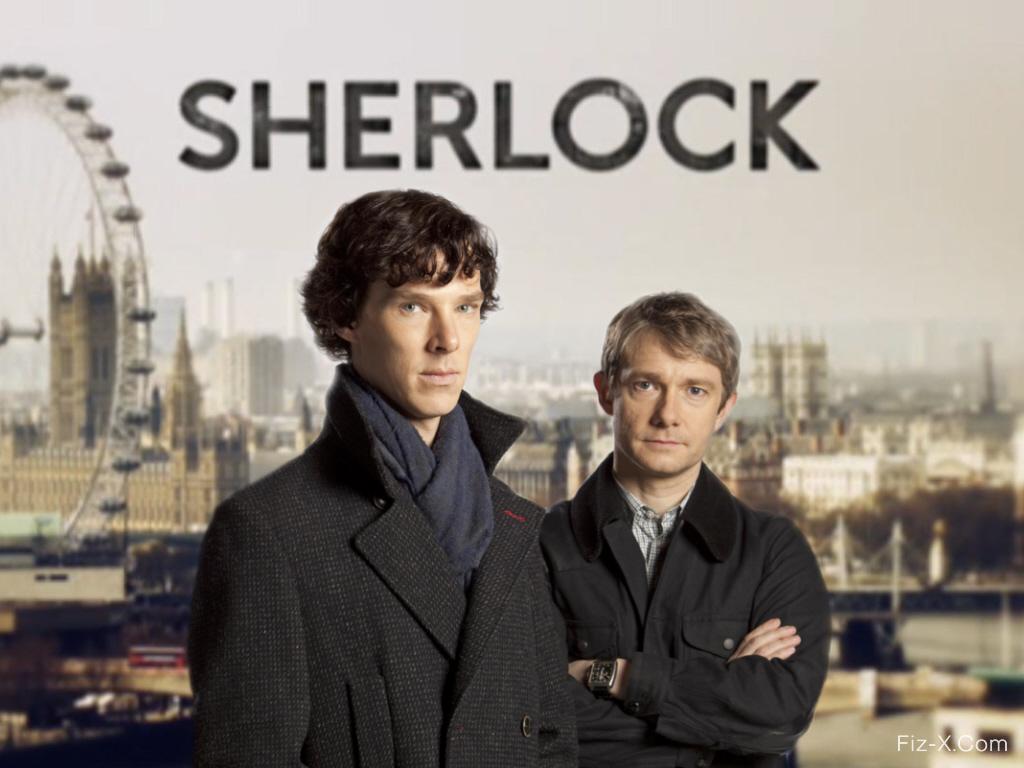
2. Nothing. Including: HOW DID SHERLOCK NOT DIE. WHAT AND WHY IS THAT THING ON JOHN’S UPPER LIP. HOW DID MARY HAPPEN. Basically all the questions you’ve wanted, you wouldn’t get.
3. Martin Freeman’s anger post-Sherlock’s Lazarus act stole the show tbh. All that raspy growls he keeps making from the conflicting forces of relief/happiness and indignation/hurt + his constant physical assaults of Sherlock – PERFECTLY PORTRAYED. Nice one, Freeman.
4. Mary is likeable. Amanda Abbington skillfully balances sweet with punchy, and managed to develop her character within that little screen time she was given without being too intrusive.
5. Rae from Mad Fat Diary makes a cameo. It’s pretty funny.
6. They catered to fan service and went meta quite a bit which was cute. Like the Moriarty/Sherlock slash and the Molly/Sherlock kiss, both conveniently packed into fan theories within the show. A poke at the insane Tumblr conspiracists.
7. “Everyone’s a critic.” says Sherlock, while dodging a completely honest reveal of How He Did Not Die. Very smart ah BBC. Keeping us in suspense and raising expectations to all time high, then fearing that these expectations couldn’t be met, and thus making meta-references and withholding the plot so no one can actually criticize it. I FEEL CHEATED.
8. Plot-wise, I guess because half the episode had to be shared with the whole AHHH SHERLOCK’S BACK mayhem, it wasn’t as clever or thorough as the previous episodes.
9. I do not understand the Lonely Mycroft hints, although I’m glad they’re inching into more personal territories of his. I’ve always found his character intriguing.
10. SHERLOCK’S PARENTS. John’s reaction just about sums up what everyone feels about this.
it is sometimes surprising that the world continues to be in motion as i read. i wake up to the dawn and refuse to leave my bed. a novel is print on paper but it convinces me i am in there. it is disorientating when you finally pull out – sort of like stirring awake from a dream – and find that it’s 10am: a little more than 3 hours since you were last aware.
currently in the last section of 1q84, which i’ve put off for awhile because i find all the hyped Murakami-s disappointing. this one is excessive in its detail, it moves slowly as life itself. i actually quite enjoy it, especially in long, sinking dosages which i can now afford. i’m speculating that its end would coincide with the arrival of Amy Tan’s Valley of Amazement which i ordered awhile ago.
2.
haven’t really been productive in a non-profitable sense. all that came out of me was a batch of espresso cakes, and that was only to satiate my own wants, hur. that said, it was pretty good for simple baking. i barely used a recipe. just went with leftover baking supplies and went with as much espresso as i dared.
other than that, nope. no sketching no writing, because there is no incentive and sloth compels me to stay in bed on YouTube. technology enables creativity as much as it obstructs it. the great digital paradox.
3.
growing up is not finding happiness but finding out that you had happiness all along.
all i needed was an evening of good weather, good food, and most of all good company. nothing much happened, and that was what made it beautiful.








 Q
Q 