Q

  • About
  • Q Writes
  • Q Scribbles
  • Archival

  • This reality

    Sometimes I’m hit with a pang at how fundamentally fucked up beyond repair the world is.

    It’s bone-chilling that we live in an already dystopic world and have been for centuries. In which our basic survival and needs are shackled to a man-made construct: money. More entrenched than ever, and as a result with power more dangerously consolidated than ever.

    Is it not completely illogical and horrifying that work that brings the most, and most direct, value to our lives, such as shit shovelling and trash collection, for health, hygiene, standard of living, are paid the least?

    And the most useless – or most times malignant – work are most highly compensated? For instance any work that makes people spend more, manufacture more, without any positive impact to our well-being, health, survival, or propagation. Beyond a few seconds of dopamine boost. Not only is it a harm to humankind but also the soil we are rooted to. The earth that gave us life.

    Is it not depressing that 99% of us work tirelessly for ONLY, and I stand by this ONLY, the benefit and luxury of the undeserving 1%? I say undeserving because all deserves basic necessities, but NO one person deserves a $2 million piece of accessory, especially at the expense of many, many other’s suffering, but they do.

    I strongly believe no one person should be a billionaire. Or a multi-millionaure. There should be a universal cap on one’s personal wealth, for what one person could need or use so much? Just a tiny fraction of their assets brings about a larger than proportional benefit to individuals, and then a ripple effect to the rest of society.

    When I’m feeling shallow and unthinking, I tell myself I ‘love money’, it’s fine, what’s the point of fighting a system I can never change, why not just work within in and make the best of a futile situation.

    Other days I’m in shock that we let humanity spiral to this state. When such a mood strikes and come face to face with the bleak reality, I question where most of my efforts are expended.

    In my ideal world there is no consumerism. We live to live: eat what we need, socialize, reproduce, have a community, simple entertainment through art and music.

    Currency is but trade of skills. A baker’s loaf for a weaver’s basket. The way it was before the first shekels changed hands.

    It is also in a bout of these musings that I rethink my ‘love’ for money, struck by the irony that I chase after the one thing that oppresses us all, and start thinking about what I can do that doesn’t perpetuate this rot, but rages back at the machine, even a little. Throwing starfish back into the sea kinda thing.

    Ultimately, I’ve not been brave enough to begin on the harder path that aligns with my inner belief. Yet.

    April 16, 2025

  • An ode to spaces lost

    Gillman Barracks

    Exactly 5 years ago, a second date that started everything.

    Galleries, a young artist who paints with a mirror (“the way you spot imperfections is through inversion”).

    That strange short film we watched on deflated beanbags.

    Discovering Handlebar. Every weekend a hike and dinner. Those familiar voices behind masks revealing a face through the years.

    That day K gave me a ring, I spent the whole night watching it sparkle under the strung-up lights that have illuminated so many of our evenings.

    Pearl’s Hill Terrace

    My first internship. Climbing up rooftops for a break. Those moss drenched greek statues and abandoned office chairs.

    Tacos al fresco, tall minty cocktails, picnics in the park.

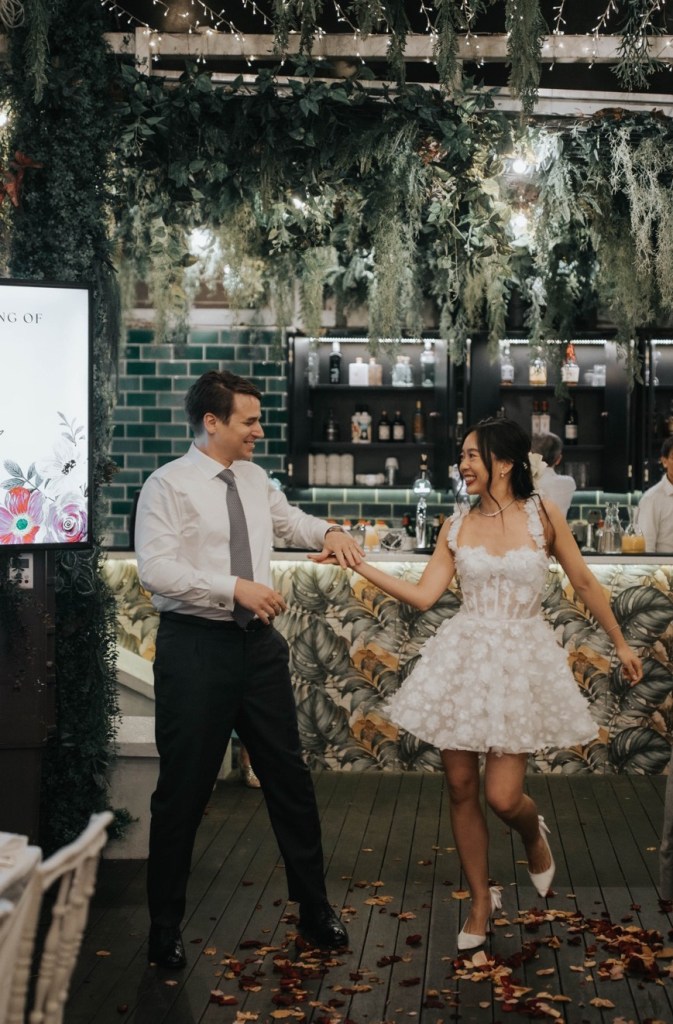
    Dance classes, hen’s day, up the wet hill with heels for our wedding dance.

    An eclectic mix of flyers — tarot, improv, French, pottery, stuffed squirrels.

    Memories clattering with impatience even as I rush to create more of them. The cling clang of de(con)struction to come. Massive beaks that paint old things a shiny chrome.

    February 16, 2025

  • Movie Review: Leave the World Behind

    It was an extraordinarily rainy day and night in the usually sunny Singapore, a perfect time for a chilling horror film. We settled on the thriller Leave the World Behind. Boy I was not ready for the ride I had unwittingly strapped into.

    Some context: I have consumed my fair share of Thai, Korean, Japanese, and American classic horror, with little trepidation. I’ve watched the supposed scariest of scary — The Exorcist — and LAUGHED because its iconic scene was so comical.

    This film genuinely scared me silly.

    [mild spoilers here] And in the absence of ghosts / spirits / demons, the supernatural, jump scares, gore, or even a classic antagonist to appear on screen.

    So why was I shaking in my seat? Because everything that transpired in the film was eerily likely to happen in our reality, and every day our reality seems to inch forward towards theirs.

    The horror films that have hit hardest with me are always ones about cults, because cults exist and the horrorific acts they commit very real. That is why Rosemary’s Baby, Midsommar, and the likes, were masterpieces in my books. Yet even they, hinged on the possible, have a measure of gore and explicit assaults by baddies.

    In LTWB, the core events started and are happening off-screen. In this contained, still somewhat safe, perimeter, you are watching aftershocks: leaving you to imagine the full extent of horror and the impending fate of our protagonists. Think Bird Box or the Quiet Place, but more removed, and on the other end of the disaster (before, not after).

    You watch the city crumble in a distance and part of the anguish is sitting at the knife-edge between hope, and the growing realization that the inevitable is heading towards you. (Or, maybe it won’t?)

    [Mild spoilers] The scene in which an oil tank approaches the shore, first indifference, then ignorance, then the dawning realization of danger — perfectly sums up the family’s (and their individual) reaction to what’s happening.

    Leave the World Behind had excellent pacing. For the first half of the film, tension is pulled to just the right taut. The parallel escalation to a climax, drawn by each groups’ adventures, was exquisite.

    It built up sufficient clues, yet left enough ambiguity in the first third, leaving room for many possibilities; resolving them patiently and neatly as the story unfolds, without contrivity. You have to pick up the links yourself, it never hits you in the face.

    I love also that characters and their narratives were kept consistent. An possible apocalypse is no time for 180° change in character, but aspects of their personalities that are latent in everyday life may manifest — they did, and did so believably!

    The camera works, sound design, and directorial choices were – i’m running out of positive descriptors – par excellence. I appreciated that the director brought back the ‘horror score against silence’, ‘slow zoom-ins for a suspense’. It was incredibly well done, standing out as a stylistic enhancement, when it could easily have been jarring if done wrong.

    Other directorial highlights are the strange phenomenon of animals, jets, ships — these large-scale abnormalities reminded me of the best and creepiest parts of NOPE.

    Most of all, LTWB had a certain restraint that many new movies lack, in a time where blockbusters are prone too BIG, DRAMATIC moments to top predecessors.

    This restraint lent a rawness and realness to the characters and their responses to the world, and is why it was terrifying.

    Besides that, I loved Ethan Hawke in this film. Never knew he was such a funny guy. He plays his role as naive professor well and every micro expression and action was spot on. I couldn’t help liking his character immensely, he makes me laugh, even when unintended, every time he’s in the scene!

    January 11, 2025

  • Book Review: The Dispossessed by Ursula K. Le Guin

    50 years after it’s publication, The Dispossessed remains relevant as ever. Le Guin presents to us a world of anarchy — not dystopian chaos as the word has come to connote (itself telling in our world’s mistrust of decentralization) — but a functioning society without centralized rule, not without its failings.

    Le Guin writes with shocking clarity of what a viable anarchy could look like through the eyes of Shevek, a theoretical physicist in anarchic Anarres. Perhaps the true genius lies in her clever juxtaposition with Urras, a capitalist society not unlike ours, to which Shevek travels.

    I can do no true justice to this novel through an analysis, and will instead share some choice observations of Shevek, a view of our society through the eyes of a true anarchist.

    On anarchic Anarres:

    “He could not rebel against his society, because his society, properly conceived, was a revolution — a permanent one, an ongoing process. To reassert its validity and strength, he thought, one need only act, without fear or punishment and without hope of reward: act from the centre of one’s soul.”

    “But what keeps people in order? Why don’t they rob and murder each other?”

    “Nobody owns anything to rob. If you want things you take them from the depository. As for violence, well, I don’t know; would you murder me, ordinarily? And if you felt like it, would a law against it stop you? Coercion is the least efficient means of obtaining order.”

    On capitalistic Urras:

    “He had not been free from anything [in Anarres]: only free to do anything. Here, it was the other way round. Like all the students and professors, he had nothing to do but his intellectual work: literally nothing. The beds were made for them, the rooms were swept for them, the routine fo the college was managed for them.”

    “The matter of superiority and inferiority must be a central one in Urrasti social life. If to respect him [an Urrasti] had to consider half the human race [women] as inferior to him, how then did women manage to respect themselves—did they consider men inferior? And how did all that affect sex-lives?”

    Rated 5/5

    November 9, 2024

  • Book Review: I Who Have Never Known Men by Jacqueline Harpman

    By the recommendation of a dear friend, I picked up this compact novel — a delightful morsel I devoured in two days, putting me in a mood that lasted for even more.

    A reviewer described this as a ‘pastoral dystopia’, which is a succinct, accurate description of the setting. I say ‘setting’ specifically, than ‘genre’, because its true genre stripped of the sci-fi cloak, is that of humanness and humanity.

    At its core, it is about finding meaning: what it means to be human in context of others, within a community, and especially to be a human woman. It is about how memory, hope, loss, loneliness, and death informs this search.

    The dystopian setting is but an excellent vehicle and vessel in the exploration of these themes. The plot is driven by the whats, hows and whys. The characters and reader alike are kept desperate to know the truth of what led to their present. Rather than tiresome philosophical musings of ‘humanness’, these questions naturally arise in the more tantalizing and concrete search for clues on what had happened in this post-apocalyptic not-Earth.

    It is a tightly written novel, every word serving their purpose. And in its simplicity of prose, the depth of our narrator’s frustrations, joys, and aloneness rings clear — a note of tragedy you cannot rid of in your head after.

    Harpman meticulously constructs a world that gives the nostalgia a unique flavor: the narrator always had enough for survival. There was no real, explicit danger. She experienced and witnessed love and companionship, she had a vague concept of a ‘normal life’, though always second-hand and beyond her comprehension. She had a community for most of her life, yet it was fragile, tenuous, and steadily frittering away.

    The implicit confusion, longing, and displacement of the unnamed narrator is reminiscent of Kathy H’s yearnings in Never Let Me Go (to be human, woman, loved). And the other 39 women and their opaque, not quite reachable memories of a past life? They are a neat parallel to one of my favorite post-pandemic wasteland fics, Station Eleven. If you liked either books, you will likely enjoy this title.

    I recommend listening to the Carpenter’s rendition of The End of The World as you read, or after you read this. It will do a number to your heart.

    Now if you have a masochistic streak and want to sink into the sublime pit of dystopian nostalgia (yup, join the gang), try also Anyone Who Knows What Love Is, a choice pick from one of the earlier Black Mirror episodes.

    October 3, 2024

  • To read a good story

    It is after 26 years as a self-professed avid reader (after my first self-read book at 5, on the Teletubbies), that i made the stunning revelation that I do not, in fact, love to read. It is a good story that I love.

    Before I go into the catalyst for this realization, let’s comb through the various clues to this I should have picked up.

    This is why I spend hours on Reddit, disregarding my husband’s scoffing that these supposed happenings are ‘not real’. So what? I’m in it for the story.

    This is why I find personal blogs just as absorbing as novels – if not more so – because they have the additional allure of being real, and raw.

    This is why I relish reading Wikipedia summaries of book and movie plots.

    This is why I read primarily fiction. The skill of reading was developed out of mere necessity owed to my thirst for stories.

    This is why I can and have read tons of research papers and non-fiction, but each is one too many because they are, truly, a spectacular yawn and a half to me.

    Why then don’t I love other forms of story-telling as much? Why do movies and shows, or even audio books, not hold as much intrigue? I think it is because I love so much a good story that their re-telling must be borne solely out of my imagination to be perfectly as I want it to be imagined. It is not the effects, the acting, the screenplay that moves me, but the core of it; the story. I watch something onscreen when I want to enjoy one of those. When I want a story, I read.

    Now back to the catalyst. At dinner just awhile ago, K alludes to a story he is reading in enticing bits and pieces. I know neither the context, the middle, nor the end. I instinctively knew this was a juicy morsel of a story, I felt that tang of anticipation of my tongue I get when I sink into a story I just knew would be good: ironic, surprising, teasing, satisfying.

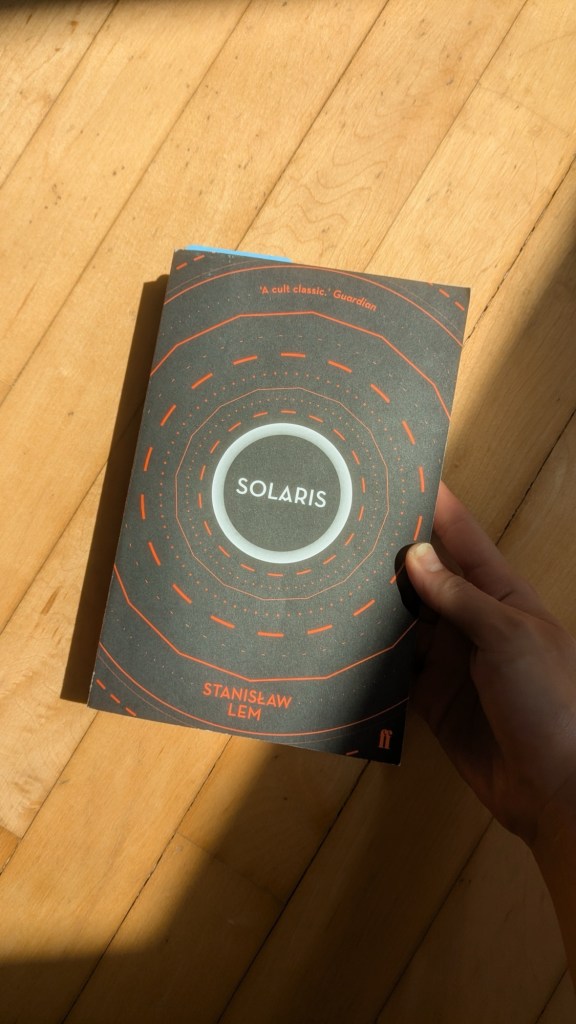
    Experiencing a deep envy that I could not ‘have’ this story (it is written in Polish), what came next was a self-reflexive understanding of my lust for the story. Not just to have something to read, but to have this story be told in an exciting, immersive way.

    September 10, 2024

  • Book Review: Lies and Sorcery by Elsa Morante

    A slow, passionate, depraved, descent into madness.

    Elsa Morante is a master at writing characters to life: each of them with their secret desires and fears unspooling like tangled yarn, knitted together into a quilt of inextricable insanity.

    And borrowing from her genius, our dear, ‘poor’ Elisa – by-product and narrator of the insanity – inherits the masterful metafictional writing of Elsa in her own retelling. At no point of her narration did I doubt the necessity of Elisa’s enervating and painful detailing of her memory.

    For those brave enough to venture forth into this complex multi-generational family drama, let it be foretold: the last two parts (400 pages long) felt like being trapped in a fever dream; a dream in which you descend an infinite and illusory stairwell that never ends and is the same as the last turn.

    Yet, it all made sense in context of Elisa’s position and motive: while Elsa is an ingenious writer (and cannot be forgiven were she the narrator), Elisa is decidedly not one. This is the reason I not merely tolerated, but perversely relished, the spiraling labyrinth of delirium that spanned 300 pages when it could have been 3.

    I love flawed characters, and in this novel you will be hard-pressed to find a single character not flagrantly flawed. I surprised myself by finding the capacity to be heartbroken for some of them (namely Francesco, Alessandra), and noted that this is not a reflection of any redeeming qualities they may have, but the depth of cruelty others’ flaws have flagellated them by.

    Indeed, this is a story about heartbreak, cruelty, delusion, derision, and obsession disguised as love. I loved it, docking one star only because I feared that if it were 2 pages longer I would have myself succumbed to lunacy.

    September 9, 2024

  • Popo, Eih Eih

    the way i bite into a too-sweet coconut candy and remember to call my grandma. “Popo buy for you!” exclaims Eih Eih, each time. Not in her native tongue, her words belie the urgency to express another’s love.

    i imagine she thinks about her mother, back home, humming a Burmese tune that threads through her string of sisters on a straw-stuffed bed. “She prays every night,” my grandma tells me.

    Left unsaid, the ponderance of devotion. My Popo in a bone-wearied gait down the aisle for the right brand of candy; Eih Eih on her knees, palms in a pious convergence; the sweet crunch between my teeth that bids me dial that eight digits i’ve worn into numerous keypads for two decades past.

    September 1, 2024

  • An ode to my Crash Baggage

    Unceremoniously left in the basement trash area, I’m so sorry. You deserved so much more. Maybe i could have sent you for repairs, after all you were indestructible for so long.

    To my dear readers, I have all my life tended to anthropomorphise my inanimate possessions, and am especially prone to object sentimentalism. The day I left my faithful Crash baggage for the last time, my heart was heavy, heavy with the weight of my own betrayal and callousness. Even today, when I remember my dear trusty luggage, the heaviness remains.

    So today, an ode to my luggage of many years.

    You came into my life in 2019.

    USA, our first trip together, and what an adventure we had! You were left on the carousel while I passed through customs, through a silly turn of events. And with barely an hour of transit, I begged through warm tears for you to be released. By ingenious miracle, you were! You were, literally, unbreakable – a slip acknowledging an attempted check by TSA stubbornly forced into your innards, but you refused to nudge open for anyone but me! I knew then it was going to be a grand time between us. I’ve retold this tale proudly many times over.

    And then COVID, we were stuck in Singapore, you and I. Nevertheless you were significant in my ventures: you accompanied me not across borders, but to a new home. My first time moving out alone!

    When we could finally fly, you did with me, to Bali, Lisbon, Porto, Paris; for work, to Seoul; to Chiang Mai; to my first trip to visit K’s family in Wrocław, to Munich, to Taipei, Sydney, London, Dublin, France again, Bali again, Wrocław a yearly affair, to my first time in Beijing and Shanghai, to Tokyo, to my very first ski trip in Japan, to, Galicia, to London and Portugal again. That fateful last trip where you finally cracked.

    Oh Crash Baggage, what a time we had together! What glorious, glorious memories we shared. I wish so much I had spent more time at our final goodbye, where I could thank you – a proper one – for being my mainstay through some unbeatable experiences. You were so good to me, the best luggage I could ever, ever hope for.

    I will never forget you. I promise you this as the ‘very, very sad classical’ playlist I’ve put on echoes my very, very sadness. As that heavy stone that has been sitting in my chest pitches up to my throat and hot tears threaten to spill from regret, guilt, sentimentality, gratitude, and so much more. Memories of you, that bright and jovially scuffed up yellow, that iconic dented body, well-used and so proud for it, whizzing down dozens of carousels towards me. My joy at seeing that familiar sight of you, always. My pride having you by my side in so many cities. You were fun, reliable, loud, loaded with meaning, so functional, yet so good looking. You were a lion and a dog, fierce and loyal. I miss you and always will, every day of my traveling life.

    Adios Crash baggage, I hope with all my heart you are well recycled, and that your spirit is carried over more continents and oceans than I can ever bring you.

    August 29, 2024

  • Batam, 2024

    There is a special joy in being a girls’ girl.

    It is to be heard, and seen, and known, and felt. It is to simply be yourself, to shrug off the costumes of roles you perform, with the confidence of knowing you are wholly accepted. And if you have forgotten who the ‘simply you’ is, they will help you find it again.

    I’ve half-jokingly referred to this weekend’s getaway with the girls as ‘a spiritual and emotional retreat’.

    The truth is it is closer to the truth than the humour implies.

    What did we do besides sit around and talk about ourselves, each other, and life? A top-notch massage with the sound of waves, excellent breakfast spreads that kept us dreaming the entire day for more, spontaneous deadlift and pull-up tutorials. Being vulnerable and sharing what we have carried as a heavy stone for years.

    I am sitting at the cusp of having so much to learn about the world and others, and so, SO much to unlearn to be better for this world and others. To be a girls’ girl is the strength that comes with knowing they will rally around you. I’m ready to take on what’s upcoming.

    August 26, 2024

Previous Page Next Page

Archive
  • November 2025
  • October 2025
  • September 2025
  • August 2025
  • June 2025
  • May 2025
  • April 2025
  • February 2025
  • January 2025
  • November 2024
  • October 2024
  • September 2024
  • August 2024
  • June 2024
  • April 2024
  • July 2023
  • February 2023
  • December 2022
  • November 2022
  • May 2022
  • April 2022
  • January 2022
  • October 2021
  • September 2021
  • August 2021
  • April 2021
  • November 2020
  • August 2020
  • July 2020
  • May 2020
  • October 2019
  • September 2019
  • February 2019
  • November 2018
  • August 2018
  • July 2018
  • June 2018
  • March 2018
  • November 2017
  • August 2017
  • July 2017
  • June 2017
  • April 2017
  • March 2017
  • February 2017
  • January 2017
  • October 2016
  • September 2016
  • August 2016
  • July 2016
  • June 2016
  • May 2016
  • April 2016
  • March 2016
  • February 2016
  • January 2016
  • December 2015
  • November 2015
  • October 2015
  • September 2015
  • August 2015
  • July 2015
  • June 2015
  • May 2015
  • April 2015
  • March 2015
  • February 2015
  • January 2015
  • December 2014
  • November 2014
  • October 2014
  • September 2014
  • August 2014
  • July 2014
  • June 2014
  • May 2014
  • April 2014
  • March 2014
  • February 2014
  • January 2014
  • December 2013
  • November 2013
  • October 2013
  • September 2013
  • August 2013
  • July 2013
  • June 2013
  • May 2013
  • April 2013
  • March 2013
  • February 2013
  • January 2013
  • December 2012
  • November 2012
  • October 2012
  • September 2012
  • August 2012
  • July 2012
  • June 2012
  • May 2012
  • April 2012
  • March 2012
  • February 2012
  • January 2012
  • December 2011
  • November 2011
  • October 2011
  • September 2011
  • August 2011
  • July 2011
  • June 2011
  • May 2011
  • April 2011
  • March 2011
  • January 2011
  • December 2010
  • November 2010
  • October 2010
  • September 2010
  • August 2010
  • July 2010
  • June 2010
  • May 2010
  • April 2010
  • December 2009
  • August 2009
  • July 2009
  • May 2009
  • April 2009
  • October 2008
  • June 2008
  • May 2008
  • March 2008
  • February 2008
  • January 2008
  • December 2007
  • November 2007
  • October 2007
  • July 2007
  • April 2007
  • January 2007
  • November 2006
  • October 2006
  • July 2006
  • June 2006
  • March 2006

Blog at WordPress.com.


Loading Comments...
 

    • Subscribe Subscribed
      • Q
      • Join 115 other subscribers
      • Already have a WordPress.com account? Log in now.
      • Q
      • Subscribe Subscribed
      • Sign up
      • Log in
      • Report this content
      • View site in Reader
      • Manage subscriptions
      • Collapse this bar