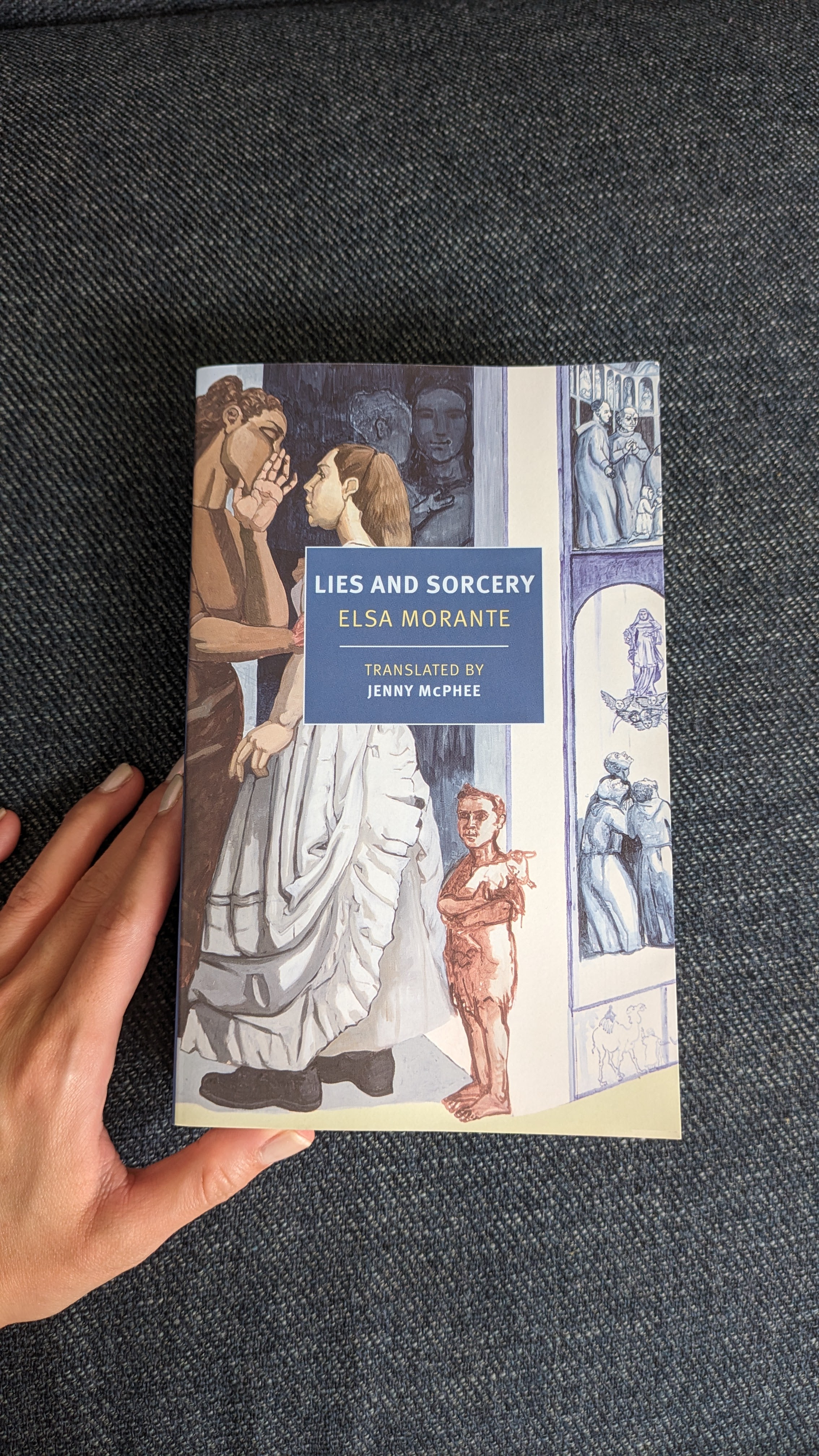
A slow, passionate, depraved, descent into madness.
Elsa Morante is a master at writing characters to life: each of them with their secret desires and fears unspooling like tangled yarn, knitted together into a quilt of inextricable insanity.
And borrowing from her genius, our dear, ‘poor’ Elisa – by-product and narrator of the insanity – inherits the masterful metafictional writing of Elsa in her own retelling. At no point of her narration did I doubt the necessity of Elisa’s enervating and painful detailing of her memory.
For those brave enough to venture forth into this complex multi-generational family drama, let it be foretold: the last two parts (400 pages long) felt like being trapped in a fever dream; a dream in which you descend an infinite and illusory stairwell that never ends and is the same as the last turn.
Yet, it all made sense in context of Elisa’s position and motive: while Elsa is an ingenious writer (and cannot be forgiven were she the narrator), Elisa is decidedly not one. This is the reason I not merely tolerated, but perversely relished, the spiraling labyrinth of delirium that spanned 300 pages when it could have been 3.
I love flawed characters, and in this novel you will be hard-pressed to find a single character not flagrantly flawed. I surprised myself by finding the capacity to be heartbroken for some of them (namely Francesco, Alessandra), and noted that this is not a reflection of any redeeming qualities they may have, but the depth of cruelty others’ flaws have flagellated them by.
Indeed, this is a story about heartbreak, cruelty, delusion, derision, and obsession disguised as love. I loved it, docking one star only because I feared that if it were 2 pages longer I would have myself succumbed to lunacy.
 Q
Q 