Q

  • About
  • Q Writes
  • Q Scribbles
  • Archival

  • comfort of a thought you

    It is the thought you I want most. Its lines
    sharp and scalpel clean, breathing cool
    words from my tattered paperbacks. I fold
    in neat angles; a colt with origami legs quiet
    on my palm.

    The you now are impossible shapes in a dream
    of water. Rushing, rising, ebb and slow-
    shifting haze of hues I cannot name. Leave me
    blinking in a curling tide. Fill each crest with hope
    and a hologram you; Its sea-foam laughter

    streaming through my cellophane hands. Awake,
    I would unfold you and read your edges like braille.

    October 8, 2015

  • Transient

    Piece written for SingPoWriMo a few months back, give a picture prompt:

    –

    no bells would toll for him. somewhere
    the hasty half-ring of boy on bike.

    we negotiate a world after: the ghost
    sting of diesel missed only by student,
    late, catching the tail end of -ajulah
    singapura. home, the daily stray rolls
    a haughty eye at barren bowl.

    in headier years his biro scratched
    itself dry: sir. english is no good, beg pardon. thank you for racial harmony, chinese now take my taxi.
    at rallies, his lungs rattle
    with alien words; joins a skyward
    sea of fists.

    now,
    a film of dust on knuckles.
    a face as single flip book page.
    a child’s shriek quailed by mother,
    “肮脏,不要看”

    September 24, 2015

  • Protected: Pillow

    This content is password-protected. To view it, please enter the password below.


  • Rethinking ‘Shopgirl’ by Steve Martin

    Shopgirl has always been one of my favorite novellas of all time. It’s clean, exquisitely written, and feel good without the usual triteness. Lately i revisited it in my memory, out of nowhere, and thought of the way Mirabelle’s identity has been sculpted and managed by a male narrative. That’s something i’ve never noticed before.

    As appealing as the novella’s serenity is (specifically, i praised it for being ‘highly cognitive’), it’s not a truthful portrayal of love, of a woman’s path in finding herself. Mirabelle is romanticized, idealized, couched within the framework of acceptable insanity. She is quirky, she is unaccomplished, she is even clinically depressed – but she’s all that without fuss. Mirabelle is quelled by the dominant narrative voice, bolstered and made whimsical by her quietness. We barely know Mirabelle, the real one, with all the tears and neurosis that definitely has to be there.

    Like Tom, the ‘regular lunchtime Mirabelle-watcher’ – who ogles at her while we are supplied with an impeccable descriptive piece of Mirabelle’s unassuming sexuality (‘Mirabelle’s legs are slightly ajar, creating a wee wedge of a slight line right up her skirt’) – we have become spectators to the undressing of Mirabelle under Steve Martin’s neat dissection of her as an object of desire.

    Ray Porter, protagonist extraordinaire, lonely and sophisticated, romances Mirabelle before becoming generous father figure. It’s indicative of Steve Martin’s own fantasies of philandering guilt-eased by philantrophy, and I’m surprised I didn’t pick it up sooner.

    Precisely what I had loved about Shopgirl – its elegant ways, its well of benevolent characters, are its very faults. In my brief re-reading, Mirabelle is more self-effacing than i’d initially remembered. Ray Porter is too much a projected self, and Jeremey’s trajectory of growth much too optimistic. Jaded, maybe? But coffeehouse romance has once more tipped to the scale of 0 in the scoreboard of Good Reads in this Genre.

    September 19, 2015

  • <e-nd>

    it was over text

    sans serif black and
    white, sealing away
    our polychrome days.

    i cried once
    to the shower head,
    put on silent,
    set as private.

    like is more than blue thumbs;

    more than a fluorescent square floating
    in the sea of ink flooding your room

    each night. your hands formless and untouched,
    speaking to no one.

    September 19, 2015

  • Read: The People in the Trees, by Hanya Yanagihara

    Read 14th Jul 2015

    Sometimes you begin a book expecting an easy read, a good read – but instead finds yourself challenged, discomfited, plagued with questions when you anticipated a story. The People in the Trees is that – and because of that, an brilliant novel.

    It is written as an autobiographical account by Dr Norton Perina, the writing straightforward and almost medical, which I found very fitting of his character. Despite the terse narrative tone, it remains evocative. Often excessive, occasionally sentimental, the narrative meanders with Perina’s whims. We may miss crucial information, and be assaulted with unnecessary ones, but ultimately we are reminded that this is Perina’s account, and his story to tell.

    You would find the protagonist mainly insufferable, for all his indulgent desires and pride. Perina believes himself special, and the rest of the scientific community to be dense or passionless. As obnoxious as he is, there is a strange draw to his neuroses and (very human) tendency towards cruelty. There is little attempt to call for empathy, merely the plain laying out of Perina’s perspective.

    The most fascinating section of the book would be, predictably, Norton’s first trip to the Micronesian country and his trek into the jungle. The images of unexplored land and an untouched tribe (and everything else in between) stuck with me long after I’ve put down the book. So graphic was the imagery that I found myself feeling disoriented, stickied by the tropical heat, dazzled by unfamiliar colors. This is also probably the only section that many critiques of this book can stand. From here, it descends into what many harshly brands as ‘moral relativism’.

    They are absolutely correct. It is also what – at its very core – is done right with the novel. It transcends most of our expectations of it as a mere adventure novel, becoming instead a shocking insight into colonist harms and inter-cultural moral relativism. I like shocks. Perina’s voice as central works perfectly here, exemplifying the careless way the first world plunges into found societies with little thought of its consequences.

    While well-meaning, Perina is preoccupied with what he believes to be the greater good for a scientific community (and the others for anthropological knowledge). Much of the harms and dismissive behavior lay implicit in their actions. It is brilliantly written precisely because Yanagihara is hands off with the reproach. It displays colonist ignorance without being preachy. This is the antithesis to indulgent ‘white’ novels I find to be huge yawns as a Southeast Asian.

    At its heart, the novel forces us to face the futility of imposing absolute morals, especially on a culture we know nothing about. The exposé of Perina is a beautiful allegory of how flawed the conception of a universal, superior ‘morality’ is. This is not a novel for the narrow-minded, or anyone who is searching strictly for an ‘adventure’ novel. It is a piercing exploration of anthropology and white superiority, and is fantastic at what it does.

    September 19, 2015

  • Girl after 20 years

    A girl who has not written for twenty years picks up her pen and writes her first word in two decades. The word was ‘I’. She is no longer a girl by now. There are breasts in the way – sometimes she pretends they are not hers, mostly she forgets they are; her hips carry weights, foreign and dull. These days she feels clunky, finds herself picking at a pimple that isn’t there.

    On the day she writes for the first time in twenty years, she leaves behind her breasts and hips and phantom pimples.

    First she writes an ‘I’, and then pauses. It blinks – innocuous, almost pleadingly – back at her. I in a sea of white, I stranded, I, vast and alone. A sudden sense of nakedness. The girl taps backspace and tries again:

    She.

    September 17, 2015

  • Book Review: Station Eleven, by Emily St. John Mandel

    Read on 10th July 15
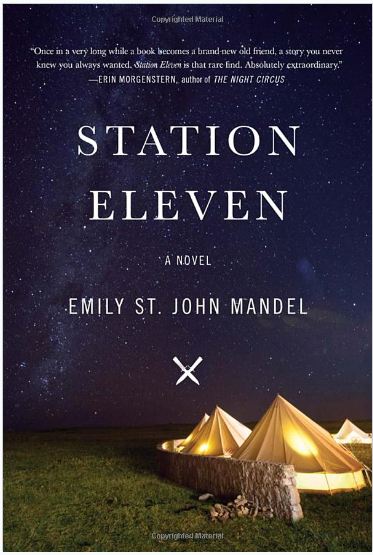
    “I stood looking over my damaged home and tried to forget the sweetness of life on Earth.”

    The world is afflicted with a pandemic, and 99% of the population is wiped out. In Year Twenty, a handful of survivors has settled into a makeshift, life post-apocalypse. The almost trite summary of Station Eleven belies a beautiful, profound exploration of what it means to be human on Earth.

    The narrative structure is ambitious but successful, selecting an interesting mix of protagonist whose lives are subtly linked along a wide timeline, reaching far back pre-apocalypse and decades after.

    One of the most poignant aspects of the novel is the contrast of its central themes. Characters before the virus struggle for an identity in modern society; deal with the urban depression of dead-end careers and iPhone zombies.

    In the post-apocalyptic world, skeletons of modern technology lie in plain view; nonfunctional. There is the sweet, pressing desire for a once powered world that is but a fantastical dream. It is this melancholy of a world lost that most strongly draws me to this novel.

    Mandel accurately, almost eerily, writes the yearning of man who has experienced and lost Earth as we know it. It’s fascinating how she can reach into such depths of longing while we still live in an age thriving with modernity. This desire of Earth and home is amplified through a tasteful metafiction of Dr Eleven.

    Beyond that, Mandel’s writing is on point. She does not just tell a story, but creates a scene. I leave the novel with vivid images in motion. Her word-crafted cinematics are seamless, not excessive enough to tax the imagination. She also does deaths stunningly, strips it of its melodrama and honors them with a grace. And yes, there are plenty of deaths. What did you expect?

    The most striking reflection I had was on the human will to survive. In the months following the sudden endemic, the stranded survivors were still waiting for a rescue team to arrive, as it always had. Decades after, even, there is the hope that makes one look up and anticipate an aircraft.

    I wonder, in the first few years post-virus – all your family (and most of humanity) gone, what makes one want to live on? When it feels like you’d be the only one left on Earth, or else live threatened by nature and other feral survivors, isn’t death a more desirable choice?

    I guess at the core of it, it’s really blind hope that keeps us going. Optimism contradicting all rationality, a human fallacy that propels us to survive beyond good reason.

    September 17, 2015

  • Book Review: Unwind, by Neal Shusterman

    Read 22nd May 15

    Recommended to me by a fellow dystopian novel lover. In summary – it has a great premise and the plot development did it full justice. What didn’t live up to its potential is the execution.

    Things I liked:

    Character development. I loved Conner, the protagonist. He had a distinct personality and motives, he was flawed, he experienced growth throughout the novel. Lev’s break from his initial beliefs was also very compelling! You know he was less one-dimensional than he appeared to be as a tithe, and this glimpse of him slowly came to view as the story progresses. Even the antagonist, Roland, was complex and believable. The dialogue was also well-written – especially loved Hayden and CyFi’s.

    The premise and plot. Shusterman uses what we already have now, and projects it into a plausible future. There’s a slight spiritual twist to it, what with all the philosophical consciousness, but moving scenes and situations were weaved with his fresh concept. An upcoming spoiler here***: one of the ending chapters of Harlan’s parts being united was so chilling. I felt waves of goosebumps all over me. Also one of the few scenes that was well-written.

    What I didn’t like:

    The execution. Especially at the beginning, instead of presenting a scene or action, the story is bared out in plain narrative. There didn’t leave much for the reader’s inference, and was thus not as engaging as it could be. I love it when dystopian novels do not explicitly explain the world, instead unfolding a scene and allowing the reader to learn about it. It shows me that the writer respects my intelligence enough to keep things implicit. Unwinding had a tendency to spell things out as they were, which i found slightly jarring in the beginning.

    The pacing was also quite poor. Some parts felt like rush jobs. There wasn’t a proper build-up, which left certain bigger events quite anti-climatic or inappropriately abrupt. The book is relatively short, so I feel like it could be expanded more for proper pacing. Given how compact it is though, it did a fantastic job developing plot and character.

    Will be reading the 2nd book!

    September 16, 2015

  • Work on these

    Things I desperately need to work on:

    1. Caring about things beyond myself and my immediate sphere. Find myself embarrassingly bound by introspection, by issues to do with friends or family. Case in point, right now. My concerns are so contained, so insignificant. On Twitter, Facebook, blogs. Most i do for issues that matter in a larger context is article reading and sharing.

    In the wake of GE2015, and taking senior seminar, i’ve been increasingly aware of my apathy. I just don’t care enough to find out – i mean properly find out – what’s wrong or right with this world. It’s not that being politically informed is an obligation, neither do i have to be well-versed in all tenets of social welfare. But. I need to care about something that has to do with the world and not just me, now, here.

    Edit: Not just caring, but making the effort to find out about. Not just half-baked ideas, fetal theories. Read up, find some hard evidence to ground myself. Need to recognize the importance of the concrete to bolster the abstract.

    2. Donate, and donate consciously. No excuse for this one. Singapore has made it convenient for donations to be made. They are everywhere, and often legitimate. However convenient they are, though, it has become instinctive to brush flaggers and donation boxes aside (something i swore not to do after my experience as a flagger lol).

    Yes, so, curb that need to power walk wherever i probably don’t need to rush to. Donate, and donate to causes i believe in.

    September 16, 2015

Previous Page Next Page

Archive
  • November 2025
  • October 2025
  • September 2025
  • August 2025
  • June 2025
  • May 2025
  • April 2025
  • February 2025
  • January 2025
  • November 2024
  • October 2024
  • September 2024
  • August 2024
  • June 2024
  • April 2024
  • July 2023
  • February 2023
  • December 2022
  • November 2022
  • May 2022
  • April 2022
  • January 2022
  • October 2021
  • September 2021
  • August 2021
  • April 2021
  • November 2020
  • August 2020
  • July 2020
  • May 2020
  • October 2019
  • September 2019
  • February 2019
  • November 2018
  • August 2018
  • July 2018
  • June 2018
  • March 2018
  • November 2017
  • August 2017
  • July 2017
  • June 2017
  • April 2017
  • March 2017
  • February 2017
  • January 2017
  • October 2016
  • September 2016
  • August 2016
  • July 2016
  • June 2016
  • May 2016
  • April 2016
  • March 2016
  • February 2016
  • January 2016
  • December 2015
  • November 2015
  • October 2015
  • September 2015
  • August 2015
  • July 2015
  • June 2015
  • May 2015
  • April 2015
  • March 2015
  • February 2015
  • January 2015
  • December 2014
  • November 2014
  • October 2014
  • September 2014
  • August 2014
  • July 2014
  • June 2014
  • May 2014
  • April 2014
  • March 2014
  • February 2014
  • January 2014
  • December 2013
  • November 2013
  • October 2013
  • September 2013
  • August 2013
  • July 2013
  • June 2013
  • May 2013
  • April 2013
  • March 2013
  • February 2013
  • January 2013
  • December 2012
  • November 2012
  • October 2012
  • September 2012
  • August 2012
  • July 2012
  • June 2012
  • May 2012
  • April 2012
  • March 2012
  • February 2012
  • January 2012
  • December 2011
  • November 2011
  • October 2011
  • September 2011
  • August 2011
  • July 2011
  • June 2011
  • May 2011
  • April 2011
  • March 2011
  • January 2011
  • December 2010
  • November 2010
  • October 2010
  • September 2010
  • August 2010
  • July 2010
  • June 2010
  • May 2010
  • April 2010
  • December 2009
  • August 2009
  • July 2009
  • May 2009
  • April 2009
  • October 2008
  • June 2008
  • May 2008
  • March 2008
  • February 2008
  • January 2008
  • December 2007
  • November 2007
  • October 2007
  • July 2007
  • April 2007
  • January 2007
  • November 2006
  • October 2006
  • July 2006
  • June 2006
  • March 2006

Blog at WordPress.com.

  • Subscribe Subscribed
    • Q
    • Join 115 other subscribers
    • Already have a WordPress.com account? Log in now.
    • Q
    • Subscribe Subscribed
    • Sign up
    • Log in
    • Report this content
    • View site in Reader
    • Manage subscriptions
    • Collapse this bar